Algorithms and Data Science for (Microbial) Genomics
The JShaw Lab will be starting in the Fall of 2027 in the Department of Computer Science at the University of North Carolina at Chapel Hill.
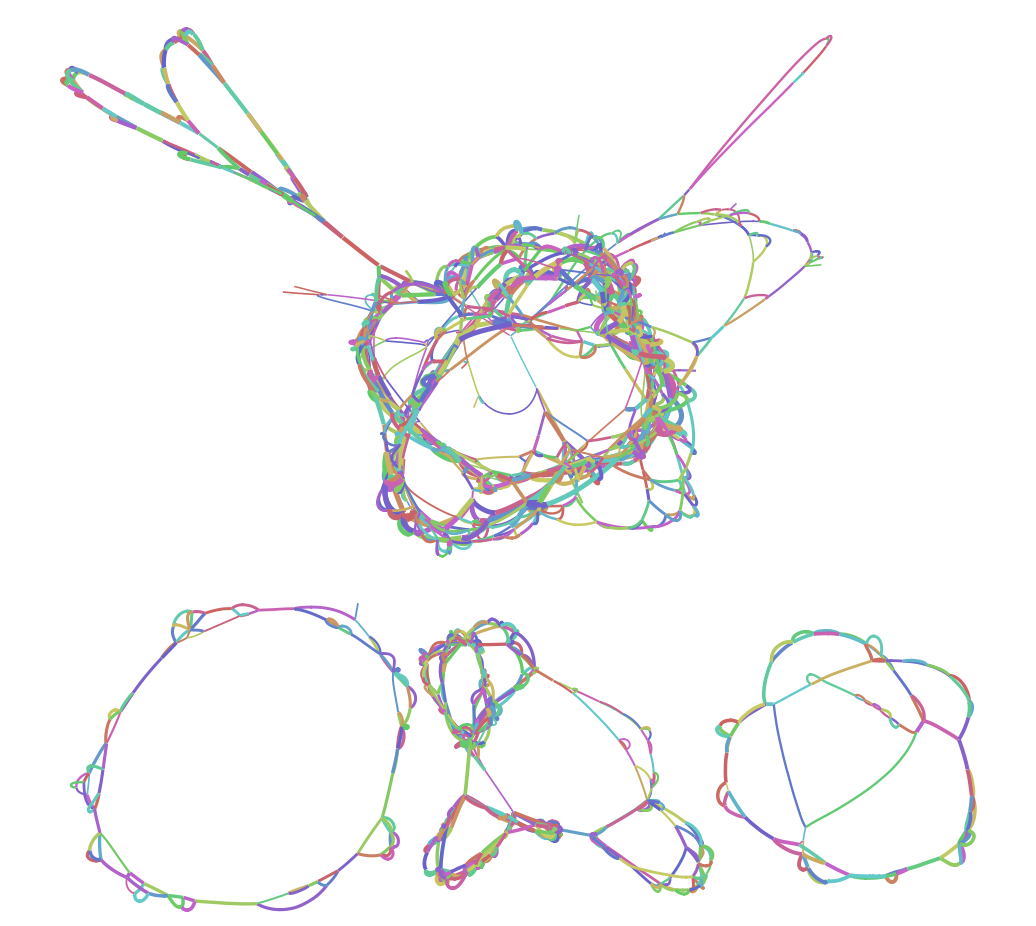
An assembly graph representing several circular bacterial chromosomes from a real human oral microbiome.
Research Overview
We build computational methods to make sense of large-scale biological sequence data, such as trillions of DNA or amino acids characters. To do this, we use a pragmatic combination of techniques spanning classical algorithm design to modern data science methods.
Our tools and software are routinely used for biological discovery. We take pride in developing cutting-edge, rigorous algorithms driven by real biological applications—usually in the fascinating field of microbiome "meta-omics" research. See below for specific areas of research we are interested in.
Research Areas
Terabyte-scale algorithms for disentangling microbial genomics data
To analyze and compare terabytes of redundant, noisy sequencing data, we design efficient algorithms and turn them into high-performance tools. We leverage ideas from string algorithms (e.g., edit distance computation / dynamic programming) and combine them with a probabilistic flavor (e.g., sketching-based techniques and statistical inference).
Long-read metagenome assembly: reconstructing genomes from substrings
We develop novel graph algorithms to reconstruct microbial genomes from the sequencing of entire microbiomes, such as our gut. In some environments, more than 90% of genomes can be completely novel; thus, our algorithms are frequently used to discover genomes of completely novel species.
Algorithms for microbiome genome evolution and horizontal gene transfer
Trillions of microbes interact and evolve in microbiomes. Evolution is driven by horizontal gene transfer, where DNA jumps between organisms. The mobile genetic elements (MGEs) involved often confer important traits such as pathogenicity or antibiotic resistance. We are building computational tools to illuminate these phenomena in human and environmental microbiomes, ultimately improving our understanding of how pathogens evolve.
Recent Publications
- 2026
- 2026
-
2025
A genomic atlas of the human gut virome elucidates genetic factors shaping host interactions